
From tribal knowledge to institutional memory
Document discovery dropped from 5–6 hours to under 3 minutes. Shipped in 3 months with a C-suite-backed adoption strategy, and Method has kept building on it since.
The problem
Method is a design and innovation consultancy with over 300 people. Projects turn around fast and expertise sits in silos, so institutional knowledge lived in people rather than systems. It sat in Slack threads and deeply nested Drive folders, or in the heads of long-tenured employees. When people left, their expertise left with them.
Everyone agreed on the problem. What nobody had was a picture of how it played out across 300-plus people. Nobody knew how to fix it, or how to get stakeholders with competing priorities behind one direction. I was part of a 15-person team that took this from research to shipped product in 3 months. I led the stakeholder alignment work, which determined what got built, and worked on the product design through weekly testing rounds.
How do we make institutional knowledge outlast the people who hold it?
Constraints
| Timeline | 3 months from research to shipped. Every alignment failure would have cost build time directly. |
|---|---|
| Stakeholders | 20+ stakeholders including C-suite, each with competing priorities and different instincts about the solution. |
| Tech stack | Any solution had to integrate with Method’s existing Google Drive infrastructure. |
| Business need | Expertise was leaving with departing employees, and earlier knowledge tools had failed to stick. |
Key decisions
In a room of twenty-plus stakeholders, the wrong process builds the wrong product. Five decisions determined what got built and what got cut.
The DVF workshop I designed and facilitated scored every concept on desirability, viability, and feasibility before opening discussion, so the roadmap emerged from the scores rather than from seniority.
Instead of crowning a single winning concept, the workshop sorted ideas into a roadmap structure, what to build now and what to build later. That split held all the way to shipping.
The workshop revealed that Google Drive integration was the condition under which any AI layer would actually get adopted rather than a nice-to-have. That reframing cut the solution space down to something buildable.
C-suite alignment created organizational commitment to a top-down adoption strategy with champions and company-wide initiatives. We treated it as a product requirement, and without that session this piece would have been cut.
Rather than validating once at the end, we ran user testing on mockups every week throughout development. Less rework, and engineering stayed aligned with what users actually needed.
The solution
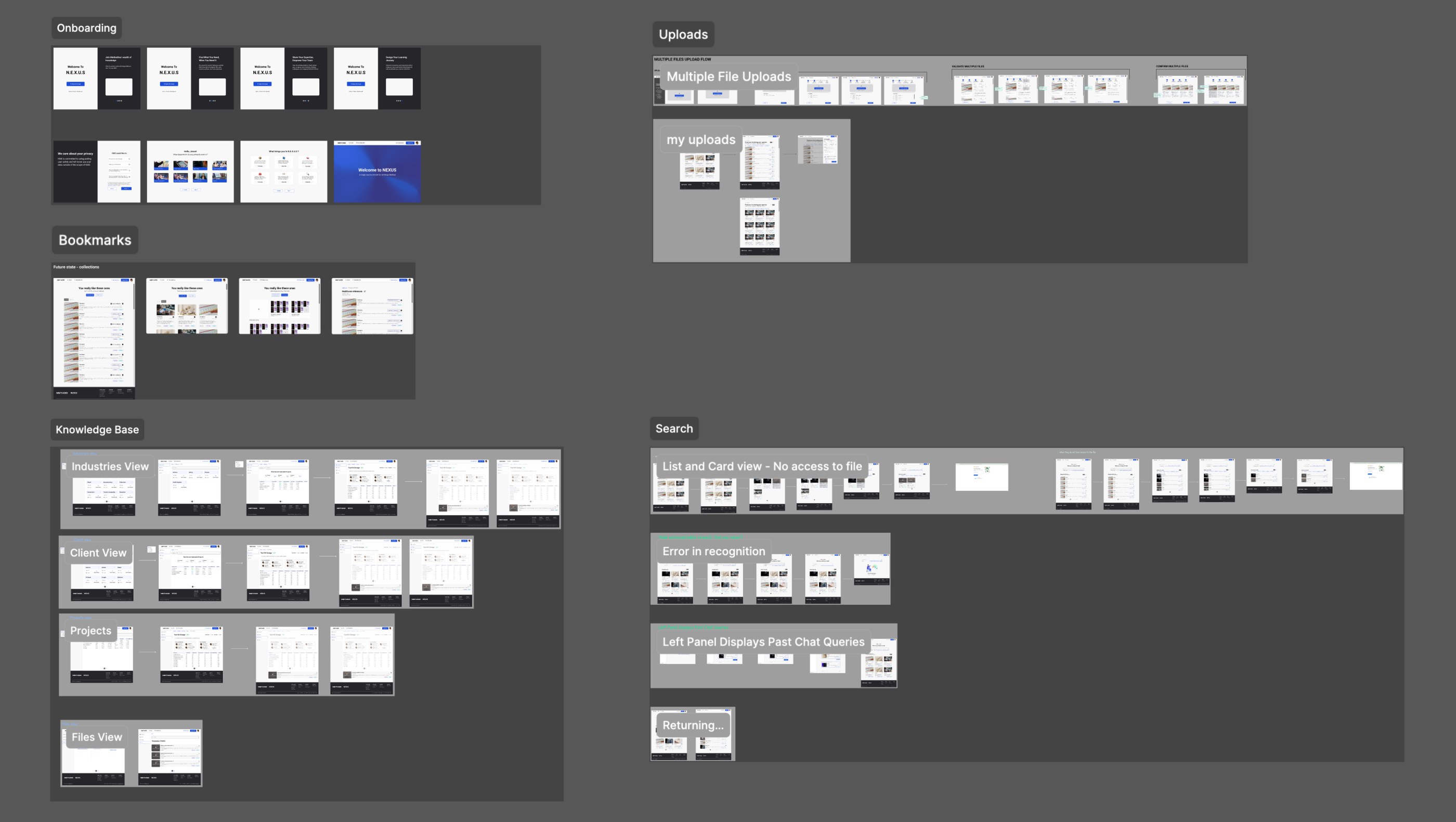
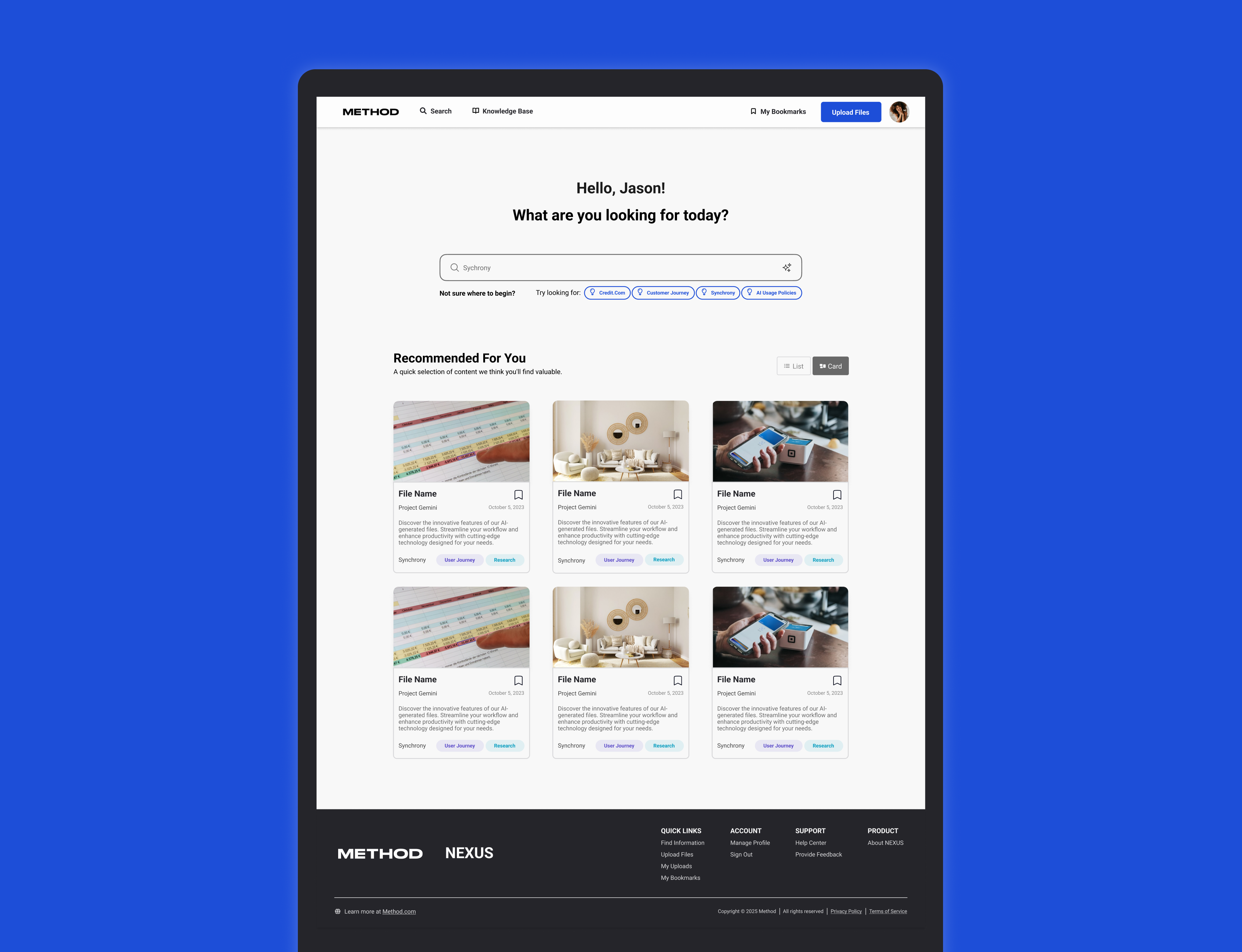
The platform did two jobs. For retrieval, conversational and smart search return answers with cited sources, replacing the hunt through Slack threads and buried Drive folders. For input, dropping in a document or link auto-completes its metadata, from topic to client to deliverable type, against a knowledge structure the team defined. The system stays organized without depending on anyone to tag things by hand.
It integrated with Method’s existing Google Drive infrastructure. It also shipped with a defined knowledge hierarchy, naming conventions, and roles.
Outcomes
Both numbers come from the same user-research method, baseline captured before anything was built. Ad-hoc knowledge sharing was replaced by a system the company committed to adopting.